Коротка відповідь: що таке жорсткий ліміт на підписки
Жорсткий ліміт на підписки — це фіксована місячна цифра на повторювані витрати. У неї входять усі місячні підписки, річні плани, поділені на 12, і активні безкоштовні тріали, які можуть конвертуватися саме цього місяця. Сенс — приймати рішення «лишаю чи скасовую» до дати списання, а не після. Ліміт — це ручне правило, яке ти сам тримаєш: жоден інструмент автоматично не блокує платіж за тебе.
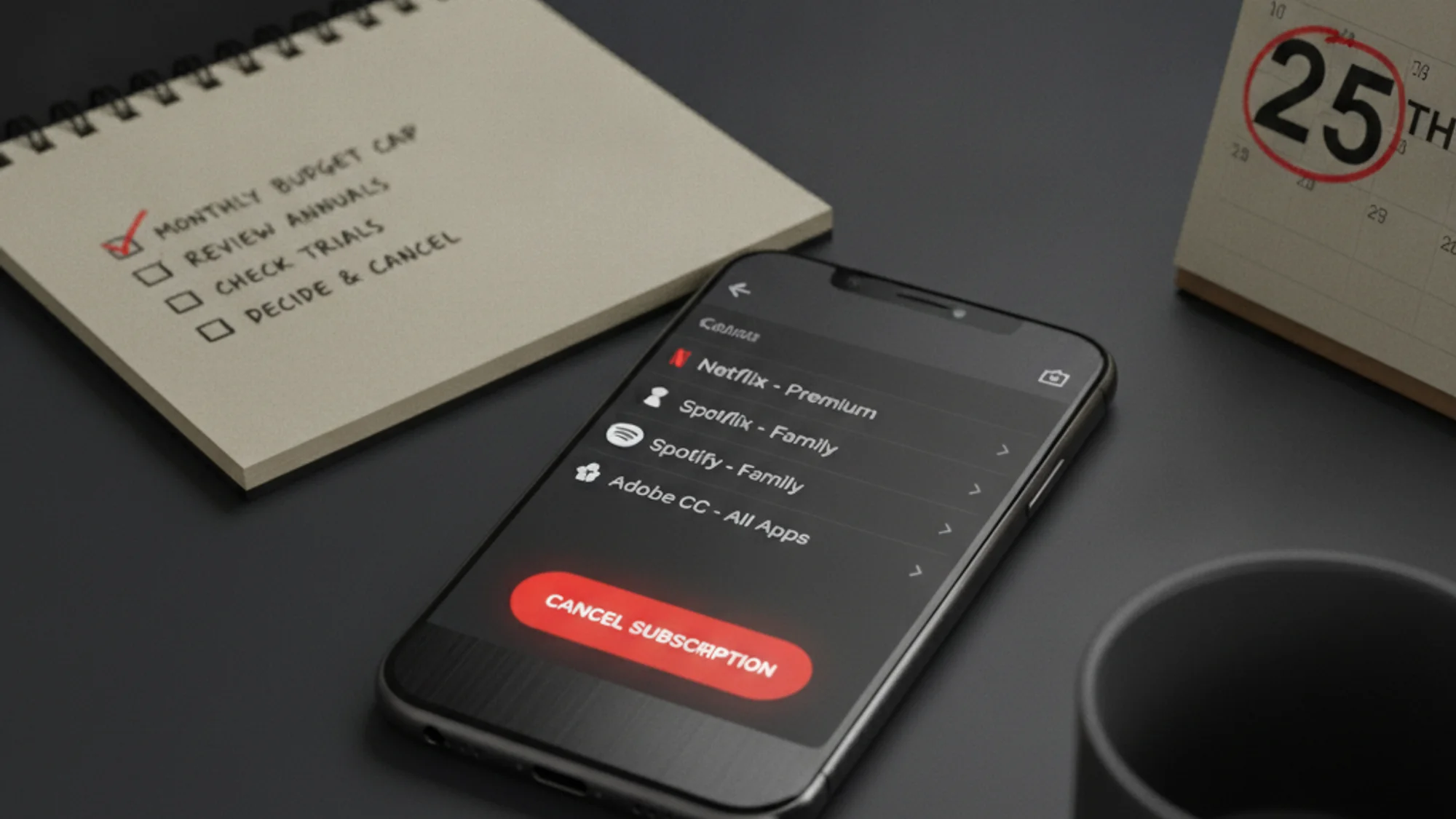
Чек-лист бюджету на підписки
- Випиши всі повторювані платежі.
- Зведи річні плани до місячної суми.
- Познач дати продовжень.
- Додай активні тріали.
- Постав дати «скасувати до».
- За кожною категорією обери must-keep сервіс.
- Перевіряй список раз на місяць.
26 березня 2026 року Netflix підняв американський план Standard без реклами з $17.99 до $19.99 на місяць, а Premium — аж до $27. Це вже друге підвищення за рік. Якщо торік навесні ви оплатили річну підписку, а ваш партнер сидить на Spotify Premium (який у лютому 2026 теж потовстішав з $11.99 до $12.99) — ваш "конверт на підписки" розжирів десь на $36–60 за наступний квартал, і ніхто не запитав, чи знайдеться там місце.
З підписками в бюджеті завжди морока. Можна вести акуратну табличку, призначити кожному долару роботу, три місяці поспіль виходити на свою норму заощаджень — і все одно отримати під дих від одного рядка, який тихо повз угору, поки ви дивилися в інший бік. Ліки тут не ще одна колонка для обліку. Це жорсткий ліміт: цифра, яку ви визначаєте один раз, а потім дозволяєте їй приймати рішення замість вас, коли черговий сервіс задирає тариф.
Чому бюджет ламається саме на підписках
Підписки погано впораються з єдиним, чого бюджет від рядка вимагає, — з передбачуваністю. Псують справу три типові сценарії дрейфу.
Перший — річні поновлення, які одинадцять місяців на рік відчуваються як безкоштовні. 17 червня 2025 Adobe перевів північноамериканських передплатників Creative Cloud All Apps на Creative Cloud Pro, піднявши індивідуальний тариф до $69.99/місяць — це зростання до 16,7%. Якщо ви платили відразу за рік, списання приходить один раз і повністю зникає з поля зору — аж до наступного року, коли воно приходить знову. Більшим.
Другий — конвертація з безкоштовних тріалів. Тріали, де картку просять одразу, конвертуються в платних на 48–60%, а 51% користувачів 30-денного тріалу відписуються тоді, коли він уже закінчився. Ви підписалися щось протестувати — а бюджет тихцем отримав нового мешканця. Якщо це знайомий сценарій, гляньте, як працюють тріали, що списують гроші на сьомий день.
Третій — повзуче дорожчання. Spotify уже двічі за півтора року підняв ціну на US Premium. Стримінгові сервіси роблять це безкарно, бо 73% американських споживачів кажуть, що зростання цін їх дратує — і все одно лишаються підписаними. Бюджет, який рахує за минулоквартальними цінами, конструктивно вже неправильний.
Якщо ви вже ведете якусь систему — YNAB, правило 50/30/20, власне "сховище" в Notion — все це для вас не новина. Категорії є, процес є. Чого немає — це примітиву, який тримав би "конверт на підписки" окремим об'єктом із власним механізмом контролю. Саме його далі й полагодимо.
Визначте число, і нехай число вирішує
Жорсткий ліміт працює не на мотивації. Він працює структурно, і про це ще сорок років тому писав Річард Талер. Його модель ментального обліку показує: люди тримають себе в руках завдяки тому, що гроші з однієї категорії сприймають як невзаємозамінні з іншою. Конверт — це не математика, це зобов'язання перед собою. У YNAB те саме завернуте в дружніше формулювання: правило перше — "дай кожному долару роботу", а правило друге — "візьми справжні витрати в обійми" — це якраз механізм, який перетворює річний платіж за Adobe на фонд $5.83/місяць замість раз-на-рік засідки. У логіці 50/30/20 цифрові підписки живуть усередині 30% "хочеться" — це і є стеля, з якої ви відрізаєте.
Висновок несмачно прямий: я обираю число, яке зможу обґрунтувати, записую його — і дозволяю йому накладати вето на наступну підписку, на яку я майже погодився. Більшість фінансових планерів радить тримати регулярні цифрові підписки в межах 5–10% від чистого доходу — це не заповідь, а орієнтир, але як стартовий пункт він кращий за той мовчазний дрейф, у якому ви зараз.
Один чесний контрприклад. Ліміт — це не "менше підписок", а "менше витрат на підписки". Apple One Family економить близько $11/місяць порівняно з оплатою кожного сервісу окремо, а Microsoft 365 Family при річній оплаті на шістьох виходить близько $1.39 на людину на місяць. Якщо ви живете в багатолюдному домогосподарстві, інколи раціональний хід — додати бандл і прибрати два окремих рядки. Перерахуйте. Сама тема бандлів заслуговує окремого розбору — про неї є текст про приховану ціну бандлів. А ліміту байдуже, чи ви в нього вкладаєтеся трьома підписками, чи сімома.
Як виглядає робота з конвертом на практиці
Три кроки. Жоден не геніальний. Усі — механічні.
Зведіть усе до місячної цифри. План Adobe Photography, який у січні 2025 одним стрибком підскочив з $9.99 до $14.99 — це тепер $180 на рік, а не $14.99 на місяць. Річна підписка YNAB за $109 — це $9.08/місяць у вашому конверті. Доки кожне списання не лежить на одній і тій самій місячній осі, ліміт лишається вигадкою — підрахуйте все у безкоштовному калькуляторі вартості підписок, щоб побачити реальну місячну суму до того, як встановлювати ліміт.
Зафіксуйте ліміт як відсоток від чистого доходу або як круглу суму, яку зможете відстояти вголос. "До 8% від чистого" або "$60 на місяць — і крапка" — обидва формулювання працюють. Не працює — "розумно стільки".
Покладіть наступні списання туди, де ви їх реально побачите — і саме тут зяє пролом в інструментах, якими ваша аудиторія вже користується. Notion підтримує шаблони повторюваних задач, але повторювані екземпляри за замовчуванням не надсилають push-сповіщень на мобільному чи десктопі — математика працює, а сигналу нема. У YNAB є методологія і механіка sinking funds, але немає календаря поновлень по кожній підписці, який попередить за тиждень до того, як спишеться Adobe.
Сенс не в тому, щоб «купити інструмент, який буде стежити за лімітом», — ліміт лишається ручним правилом, жоден сервіс не заблокує за вас платіж. Сенс — щоб прогнозована місячна сума і дата наступного продовження були видні одночасно, тоді ревізія відбувається до списання, а не після. Таблиця плюс події в календарі — працює. Окремий трекер — працює. Notion із прикрученими push-сповіщеннями — теж. Ліміт окуповується тільки тоді, коли список найближчих списань — це сторінка, на яку ти справді дивишся.
Куди дивитися далі — огляд трекерів підписок без улеслування і чому банківського трекера підписок недостатньо. Окремо про дві пастки на верхньому рівні воронки — тріали, які списують на 7-й день і приховану ціну бандлів підписок.
Бюджет — це історія, яку ти розповідаєш собі про майбутні гроші. Жорсткий ліміт потрібен лише для того, щоб ця історія не виявилася вигадкою.
Якщо вести список вручну не хочеться, Subnesio показує прогнозовану місячну суму і найближчі продовження в одному вікні — деталі на сторінці тарифів Subnesio.