In September 2025, Amazon paid a $2.5 billion FTC settlement — including refunds to roughly 35 million people — over findings that it enrolled users in Prime without clear consent and buried the cancellation path behind twelve actions across seven screens. Most of those 35 million people had a bank account that could have flagged the charge. Many had smartphones with calendar apps. Almost none of them caught it in time.
Quick answer
A calendar reminder is enough if you have fewer than five subscriptions, you already open your calendar every morning, and you remember to set the reminder in the first place. A subscription tracker app wins everywhere else: it surfaces every renewal in one view, fires its own reminders, and — if it reads your bank feed — can catch subscriptions you forgot you signed up for. The deeper problem neither tool fully solves: a C+R Research survey found people underestimate their monthly subscription spend by $133 on average. That gap is an awareness problem, not a reminder problem — and closing it requires actually reviewing what you pay for, not just snoozing an alert.
When a calendar is genuinely enough
A recurring calendar event costs nothing and lives in an app you already use daily. Two or three subscriptions you know by name — one annual reminder seven days before each renewal date is a reasonable system. The overhead is low, the privacy exposure is zero, and there is no app to configure.
The model breaks down at scale. At eight or more active subscriptions spread across different billing dates, card accounts, and renewal cadences — annual, monthly, quarterly — manual calendar upkeep becomes the kind of administrative task people quietly abandon. Research on prospective memory shows that reminders which refer only to a target event ("Netflix renews today") without naming the intended action ("cancel it if unused") are no more effective than no reminder at all. The alert fires; nothing happens.
Calendar tracking has a structural blind spot too: it can only remind you about subscriptions you consciously entered. The C+R Research 2022 survey found that 42% of respondents were still paying for a service they had stopped using — because forgetting the subscription existed is different from forgetting to cancel it. A calendar event for a subscription you don't remember signing up for will never exist.
Where subscription tracker apps actually pull ahead
A dedicated app — whether it reads your bank feed or just stores what you manually enter — solves the inventory problem that calendars can't touch. When everything is in one place, the question shifts from "do I have a reminder set?" to "what am I actually paying for this month?" That reframe is the real value.
Bank-connected apps like Rocket Money go further: they scan transaction history for recurring charges, including ones you never consciously registered. That matters because 70% of respondents in a 2026 Self Financial survey admitted to being locked into a paid subscription because they forgot to cancel a free trial — and you can't set a calendar reminder for a subscription you don't know you have.
Manual-entry apps like Bobby (iOS, $1.99 one-time) or Subnesio sit in the middle: they require you to log subscriptions yourself, but the consolidated dashboard makes it hard to forget one exists. The trade-off is real: manual entry is only as complete as your memory and your bank statements during setup. A 2026 report found that 10 of 14 major subscription tracking apps require a bank connection — a meaningful constraint for users who don't want third-party services reading their full transaction history, including salary deposits and rent payments.
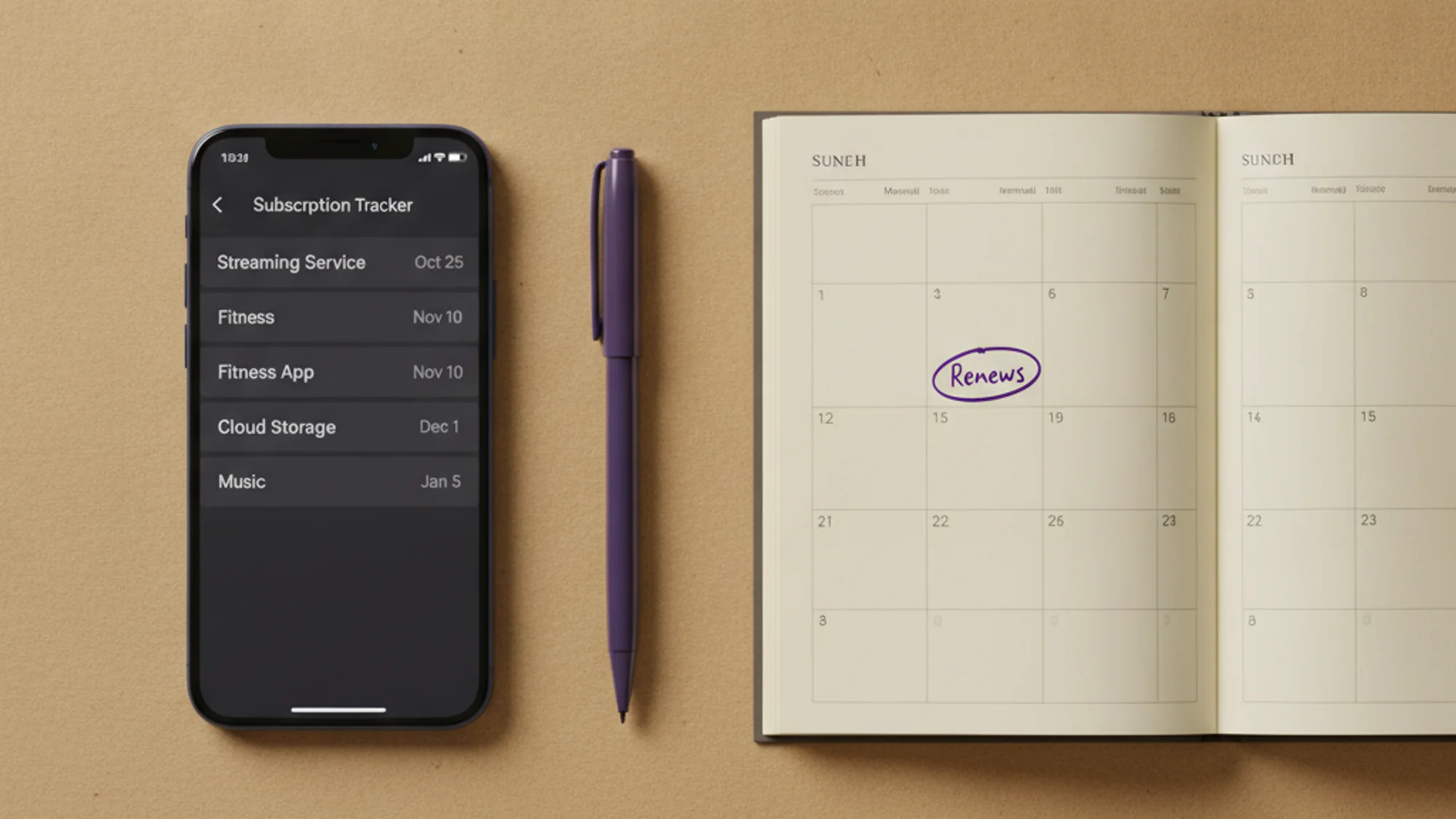
Apps also handle the reminder layer automatically. You set a billing date once; the app fires alerts before each renewal without you touching anything. Compare that to recreating a Google Calendar event every time a subscription renews or changes price.
For a fuller look at the manual-versus-bank-connected trade-off, this comparison of subscription tracker apps covers privacy implications and the specific apps that work without linking to your bank.
The problem neither tool solves on its own
The data suggests the real obstacle is not forgetting renewal dates. It's not knowing what you pay for in the first place.
The West Monroe 2021 poll found that 89% of consumers underestimated their subscription spending — and 66% were off by more than $200. That's not a missed calendar event. That's a systemic lack of awareness of what's being charged — and a calendar reminder can't fix what it doesn't know about. An app that auto-detects charges is closer, but bank-sync tools can miss subscriptions billed to a card not linked to the aggregator, prepaid cards, or charges that appear under generic merchant names.
The FTC's "Click to Cancel" rule, finalized in October 2024, was supposed to require that cancellation be as easy as sign-up. The Eighth Circuit vacated it in July 2025; the FTC reopened rulemaking in March 2026. Until that regulatory fight resolves, consumers are left managing this themselves — which is the actual reason the calendar-versus-app question matters.
If you want to close the awareness gap, start by listing every subscription from the last three months of bank and card statements. Then decide which system you'll use to track them going forward. The true cost of forgotten subscriptions runs the numbers on what the awareness gap costs annually.
Both tools work. The best one is the one you'll actually open before a renewal hits.
P.S. If you haven't audited your subscriptions in the last six months, that $133 gap is probably yours too — the average person's self-estimate hasn't gotten more accurate since 2022.